Last checked: June 10, 2026
Quick answer
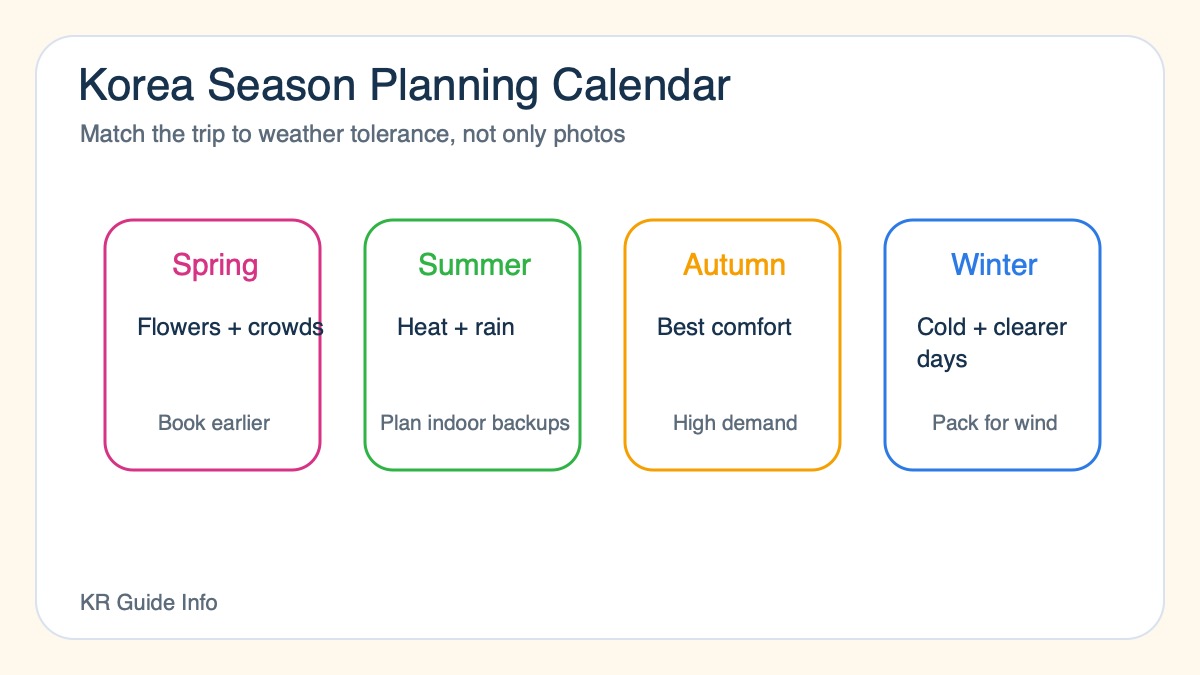
The best time to visit Korea depends on what kind of discomfort you want to avoid. Spring and autumn are usually the easiest first-trip seasons, summer is humid and rain-prone, and winter is manageable if you plan for cold weather, shorter daylight, and indoor breaks.
Spring works well for balanced city travel
Spring is popular for a reason. It often gives travelers the most comfortable balance between walking conditions, outdoor time, and general city pace. If the trip is built around neighborhoods, parks, and long city days, spring usually feels efficient and rewarding.
The tradeoff is that popular windows can also bring heavier crowds and more pressure on transport, accommodation, and timing. Comfortable weather does not automatically mean a low-stress trip if everyone is aiming for the same seasonal moment.
Spring is usually strongest for travelers who want a classic first Seoul experience with a lot of daytime movement.
Summer rewards discipline more than spontaneity
Summer can still be enjoyable, but it is less forgiving. Heat, humidity, and sudden weather changes matter more when the itinerary depends on long walks and multi-stop days. That does not make summer a bad choice. It means the route has to respect physical reality more.
- Shorter walking blocks matter more in summer
- Indoor breaks become part of good planning
- Late afternoon and evening can be more usable than midday
- Transport efficiency matters more when weather drains energy
If you travel in summer, simplifying the route often improves the whole trip. A disciplined itinerary usually feels better than an ambitious one in that season.
Autumn often feels like the easiest all-around season
Autumn works well for travelers who want comfort, strong city rhythm, and enough outdoor capacity to handle longer days well. It can be one of the most practical seasons because the weather often supports movement without the same physical drag many travelers feel in peak summer.
That makes autumn especially strong for visitors who want both cities and regional movement inside the same trip. It often supports the widest range of itinerary types with the least physical compromise.
For many travelers, autumn is the easiest season to plan around if they are unsure where to start.
Winter can be excellent when the trip accepts winter logic
Winter is not only for snow-focused travel. It can also work well for city visitors who prefer a calmer pace, stronger indoor planning, and fewer warm-weather crowds. The adjustment is accepting that winter changes how long you want to stay outside and how you structure the day.
A winter Korea trip usually works best when you build it around indoor strength and shorter outdoor blocks instead of pretending the season changes nothing. Travelers who like slower schedules often do better in winter than they first expect.
The best way to choose your season
Choose the season that matches your pace, not the season the internet praises most loudly. Spring and autumn often feel easiest. Summer works when you plan with restraint. Winter works when you accept a different daily rhythm.
Once you decide the season, the next important step is adjusting the itinerary to fit it. That is what usually turns a decent trip into a good one. Season choice works best when it supports the route, hotel base, and daily pace together.
Why seasonal planning changes the whole trip shape
Best Time To Visit Korea By Season: How Spring, Summer, Fall, And Winter Actually Feel matters because seasonal conditions affect much more than packing. They change route ambition, how long you want to stay outside, what kind of day trips feel comfortable, and how crowded some parts of the trip may become.
That means the season should influence the pace of the itinerary, not just the clothes you put in the bag.
How to use seasonal advice well
The best seasonal planning usually comes from adjusting daily structure to match weather, light, and energy conditions. That is often more helpful than searching for one “best” month. What works beautifully in one season may feel like bad pacing in another.
- Let weather change the number of stops in a day
- Protect indoor flexibility when conditions are harsher
- Expect seasonal crowding to affect timing and pace
- Use the season to simplify the route rather than complicate it
How KR Guide Info checked this guide
This guide was reviewed as a practical season and timing choice guide for foreign visitors, with the goal of reducing real travel friction rather than adding generic destination description.
- compared each season by practical travel friction: heat, rain, cold, crowds, booking pressure, and outdoor comfort
- kept the recommendation based on trip style rather than only scenic photos or festival hype
- retained official weather/tourism source links so readers can confirm conditions close to departure
Official sources
Related KR Guide Info guides
Update log
Turn seasonal timing into a practical route
Once you choose the season, use these guides to shape the actual route and first-day setup.
- 7-day Korea itinerary for first-time visitors — turn season choice into a realistic first-trip route
- Korea arrival checklist for first-time visitors — prepare the basics before the travel date
- Korea convenience store guide for travelers — plan for easy food, drinks, and small errands during the trip