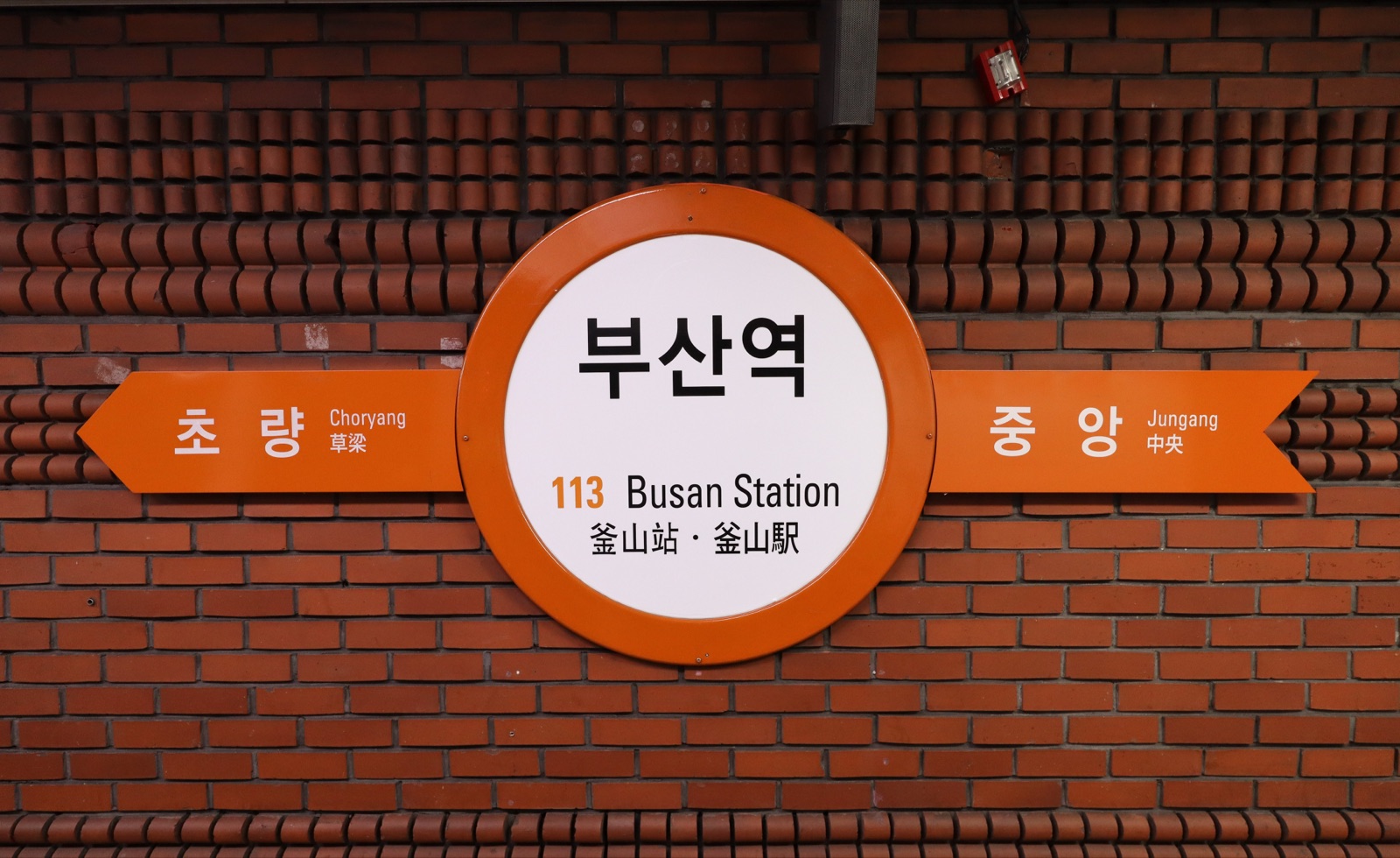
Last checked: June 16, 2026. Busan transport websites and station-area services can change, so confirm train times, locker availability, and airport connections on the official sources linked near the end before you travel.
Disclosure: This guide is editorial and informational. It does not contain paid affiliate links and is not affiliated with Korail, Busan Metro, Visit Busan, or any transport operator.
Quick answer
If you arrive at Busan Station by KTX or regular train, the simplest first move is usually: exit the rail concourse, decide whether you need a locker or hotel drop-off, then use Busan Metro Line 1 for Seomyeon, Nampo/Jagalchi, and many central transfers. Take a taxi when you have heavy luggage, arrive late, or are going directly to Haeundae, Gwangalli, or a hillside hotel.
Do not plan your first hour in Busan as if the station is only a train platform. For first-time foreign visitors, Busan Station is a decision point: luggage, subway card, restroom/food break, onward route, and whether your hotel area is better reached by subway, taxi, or a combination.
Who this guide is for
- You are taking the KTX or another train from Seoul, Daejeon, Daegu, or another Korean city to Busan.
- You need to choose between subway, taxi, luggage storage, or going straight to your hotel.
- You are staying in Seomyeon, Nampo, Haeundae, Gwangalli, or near Busan Station.
- You want a practical first-hour plan, not a generic list of attractions.
First 10 minutes after getting off the train
- Move away from the platform before stopping. KTX arrivals can create crowd pressure near escalators. Step into the concourse before checking your phone.
- Confirm your hotel area, not just the hotel name. “Busan” addresses can be spread across very different districts. Search the hotel in Naver Map or KakaoMap and note the nearest subway station.
- Decide whether luggage changes your route. A no-transfer subway route is easy with one small suitcase. A transfer route with stairs, crowds, or a late arrival may be better by taxi.
- Use the station break deliberately. Restroom, water, convenience-store snack, T-money top-up, and route check are easier before you are standing at a subway gate.
Which onward option should you choose?
| Your situation | Best first move | Why it works | Watch out for |
|---|---|---|---|
| Hotel near Busan Station | Walk or short taxi after checking the exact address | Fastest and avoids unnecessary subway transfers | Some hotels are on slopes or across large roads; check the walking route first |
| Staying in Seomyeon | Busan Metro Line 1 | Direct, central, and usually easier than taxi during busy periods | Keep luggage compact during commuting hours |
| Staying in Nampo, Jagalchi, or BIFF Square | Busan Metro Line 1 | Direct line from Busan Station area toward the old downtown waterfront | Hotel entrances can be hidden in market streets; save the address in Korean |
| Staying in Haeundae | Taxi if tired or carrying luggage; subway if you want predictable public transport | Haeundae is farther east, so comfort and timing matter more | Subway usually involves a transfer; taxi time depends on traffic |
| Staying in Gwangalli/Suyeong | Subway with transfer or taxi depending on luggage | Good if you know your nearest station before leaving Busan Station | Beach-area hotels may be a walk from the nearest station |
| Day trip with no hotel yet | Use luggage storage first, then start with Nampo or Seomyeon | Keeps the first route simple and reduces backtracking | Locker availability is not guaranteed during event weekends and holidays |
Busan Station to major visitor areas
Seomyeon: easiest central base
Seomyeon is a practical first stop if you want food, shopping, nightlife, and subway connections. From Busan Station, it is usually a straightforward Line 1 ride. It also works well when your later plans include both east-side beaches and west/central Busan.
Best for: first-time travelers, short stays, people who want many food options after check-in, and visitors who do not want to commit to one beach area.
Nampo and Jagalchi: old downtown and harbor-side sightseeing
Nampo, Jagalchi, BIFF Square, and Gukje Market are convenient from Busan Station because they sit along the same Line 1 corridor. This is a good direction if you arrive before hotel check-in and want a compact first walk with food and markets.
Best for: travelers who want markets, harbor atmosphere, seafood areas, and a Busan feel immediately after arrival.
Haeundae: beach base, but farther from the station
Haeundae is one of Busan’s most famous visitor areas, but it is not next to Busan Station. If you have a large suitcase, children, or a late arrival, a taxi can be worth considering. If you use the subway, check the transfer route before you tap in.
Best for: beach-focused trips, resort-style hotels, and travelers who will spend much of the stay in eastern Busan.
Gwangalli: good for evening views, less direct with luggage
Gwangalli can be excellent for an evening beach walk and bridge views, but the final walk from the nearest subway station varies by hotel. If you are arriving with luggage, map the last 500–900 meters before choosing subway over taxi.
Best for: couples, nightlife-light travelers, and people who want a scenic evening without going all the way to Haeundae.
Luggage strategy at Busan Station
Your luggage decision affects the whole day. Before leaving the rail concourse, choose one of these three plans:
- Hotel-first plan: best when your hotel allows early bag drop and is easy to reach by subway or taxi.
- Locker-first plan: useful for a same-day Busan stopover, but never assume every locker will be available during concerts, festivals, weekends, or school holidays.
- Carry-light plan: realistic only if you have a backpack or cabin-size suitcase and your first destination has elevators or short walks.
If you are traveling during a concert or large event period, build a backup: a station-area paid storage service, hotel luggage drop, or a taxi directly to accommodation. A full locker area can turn a good itinerary into a stressful first hour.
T-money, cards, and apps before you leave the station
- T-money or compatible transit card: useful for subway and many buses. Top up before entering the subway if your balance is low.
- Foreign credit/debit card: widely useful for many purchases, but do not rely on it for every small transport-related transaction. Keep a small cash backup for top-ups or unexpected situations.
- Naver Map or KakaoMap: use one of these for local routing. Google Maps may be less reliable for detailed Korea transit and walking instructions.
- eSIM/SIM: activate data before you leave the station if possible. A working map app is more valuable than trying to memorize station exits.
Step-by-step arrival plans
Plan A: You arrive before hotel check-in
- Check whether your hotel allows luggage drop.
- If yes, go hotel-first and start sightseeing without bags.
- If no, store luggage near Busan Station if available.
- Choose a low-friction first area: Nampo/Jagalchi for markets, Seomyeon for food and shopping, or a cafe near your hotel area.
- Do not schedule a hard-to-reach attraction immediately after arrival. Leave room for train delays, locker searches, and navigation mistakes.
Plan B: You arrive at night
- Prioritize the safest direct route to your accommodation.
- Use taxi if the subway route involves transfers, long walks, or unclear exits with luggage.
- Save the hotel name and address in Korean before boarding the taxi.
- Do convenience-store food or a simple restaurant near the hotel rather than crossing the city late with bags.
Plan C: You are connecting to Gimhae Airport
Busan Station and Gimhae International Airport are not the same area. If you are connecting to a flight, check the route with your exact departure time and allow a buffer for transfers. The airport’s official website should be your source for terminal and flight information, while local map apps can help compare subway/light-rail routes and taxi timing.
Common first-time mistakes
- Booking Haeundae and assuming it is beside Busan Station. It is a different part of the city; plan the transfer.
- Standing at the gate while deciding the route. Decide subway direction and transfer plan before tapping in.
- Ignoring the last walk. A hotel can look close to a station but still involve stairs, slopes, or a confusing entrance.
- Planning too much on arrival day. One meal area plus one walk is often better than three scattered attractions.
- Depending on locker availability during event weekends. Have a hotel-drop or paid-storage backup.
Suggested first stops by travel style
| Travel style | Good first area | Reason |
|---|---|---|
| Food and easy evening | Seomyeon | Central, many restaurants, good transport base |
| Markets and classic Busan | Nampo / Jagalchi | Direct Line 1 corridor and compact sightseeing |
| Beach mood | Haeundae or Gwangalli | Better if your hotel is already there or you have enough time |
| Short stopover | Busan Station + Nampo | Reduces long transfers and keeps return simple |
| Concert/event weekend | Hotel or storage first | Luggage and crowd control matter more than sightseeing speed |
Related KR Guide Info guides
- First-Time Busan Travel Guide — use this for broader trip planning after you solve the arrival route.
- Busan Station vs Seomyeon vs Haeundae — compare where to stay if you only have one night.
- Busan Subway and T-Money Guide — check subway card and routing basics before you ride.
- Gimhae Airport to Busan Guide — useful if your Busan trip starts or ends by air.
- Korea Luggage Delivery Guide — consider this if luggage is the main constraint in your Korea itinerary.
How KR Guide Info checked this guide
This guide was reviewed as a practical Busan Station arrival flow guide for foreign visitors, with the goal of reducing real travel friction rather than adding generic destination description.
- reviewed the first-hour station sequence: train arrival, luggage, subway/taxi decision, hotel direction, and first stop
- kept the advice centered on station exits and transfer stress, because that is where first-time visitors often lose time
- linked to Busan subway, hotel-base, and one-night planning guides for readers continuing from the station
Official sources to check
- Korail — train information and official rail services.
- Busan Transportation Corporation / Humetro — Busan Metro information.
- Visit Busan — official tourism information for Busan attractions and areas.
- Gimhae International Airport — airport information if connecting by flight.
- Busan Metropolitan City — city-level public information.
FAQ
Is Busan Station a good place to stay?
It can be good for one night, early trains, or a short stopover. For a longer leisure trip, many first-time visitors prefer Seomyeon for central convenience, Nampo for old downtown sightseeing, or Haeundae/Gwangalli for beach atmosphere. The right answer depends on whether your priority is transport, food, markets, or beach time.
Should I take a taxi from Busan Station to Haeundae?
Consider a taxi if you have heavy luggage, arrive late, or are traveling as a small group. Use the subway if you prefer predictable public transport and do not mind a transfer. Check a local map app at the actual arrival time because traffic and route conditions can change.
Can I store luggage at Busan Station?
Station-area lockers or storage options may be available, but availability is not guaranteed. During weekends, holidays, and major events, prepare a backup such as hotel luggage drop or another paid storage option. Do not build a tight itinerary that fails if the first locker bank is full.
Do I need cash at Busan Station?
A foreign card is useful for many purchases, but a small cash backup is still practical for transit-card top-ups or unexpected situations. Before entering the subway, make sure your transit card has enough balance for the next few rides.
Which app should I use from Busan Station?
Use Naver Map or KakaoMap for detailed Korean transit, walking routes, and station exits. Save your hotel name in both English and Korean if possible, especially when taking a taxi or asking station staff for help.
Update log
- June 16, 2026: First drafted as a practical Busan Station arrival guide for foreign visitors, with emphasis on luggage, subway/taxi decisions, hotel areas, and official-source checks.
Continue planning your Busan arrival
- First-Time Busan Travel Guide: How To Plan Busan Without Making It Complicated — useful next step in the Busan arrival and planning cluster
- Where to Stay in Busan by Travel Style — useful next step in the Busan arrival and planning cluster
- Busan Station vs Seomyeon vs Haeundae: Where to Stay for One Night in Busan — useful next step in the Busan arrival and planning cluster