Last checked: June 10, 2026
Quick answer
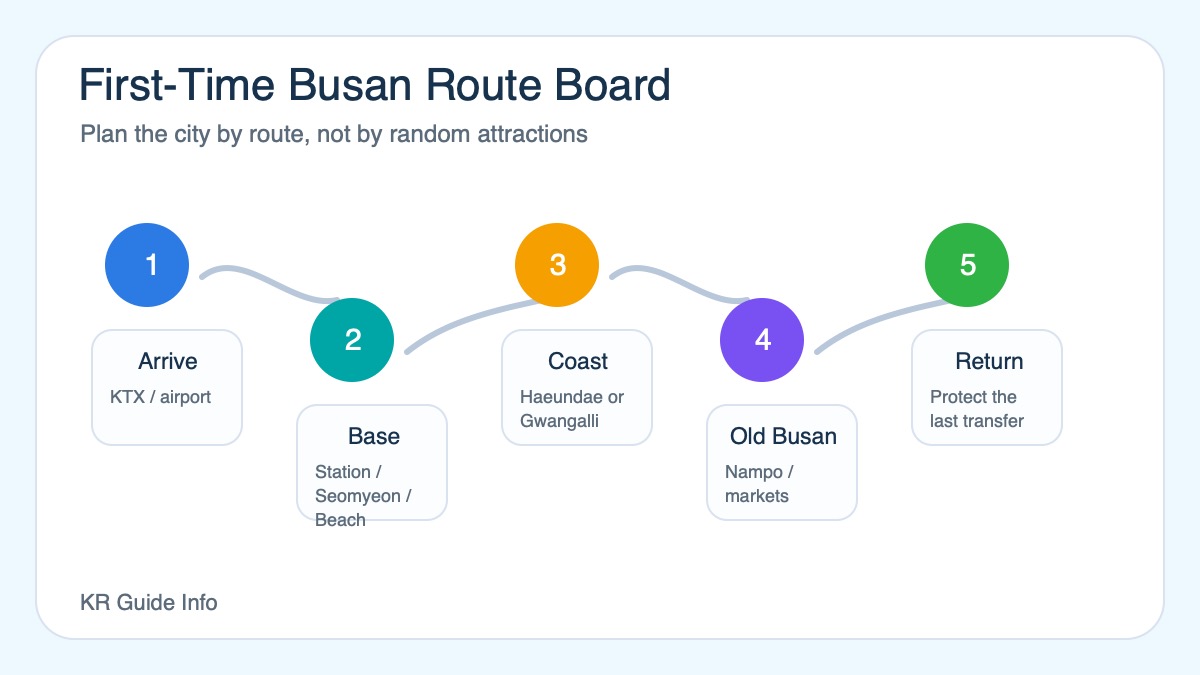
First-time Busan planning is easier when you choose one main base, group coastal sights by area, and avoid treating Busan like a compact Seoul neighborhood. Build each day around one side of the city, then add food or beach time nearby.
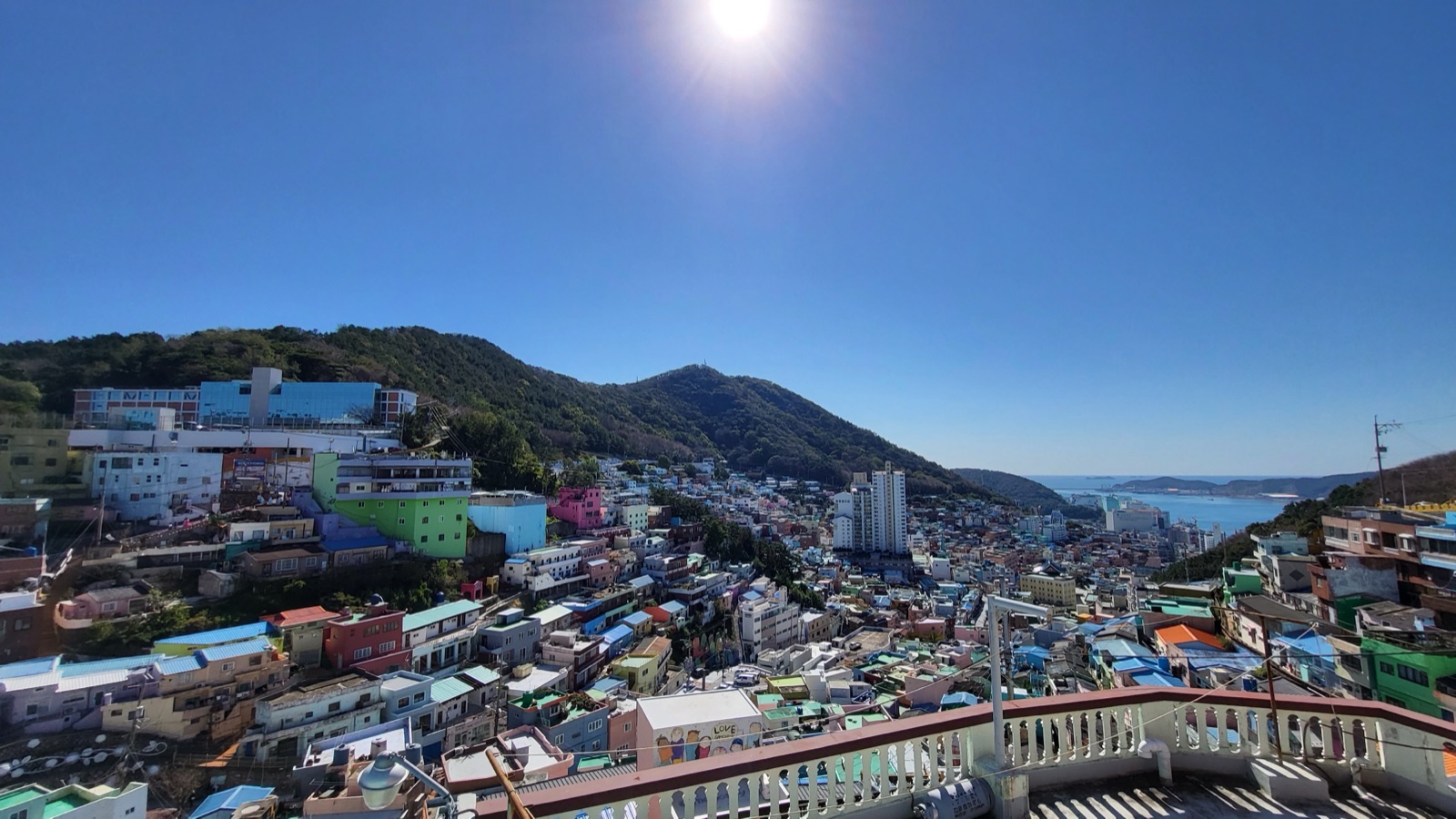

Why Busan works so well as a second-city choice
Busan gives first-time visitors a clear change of pace. It shifts the trip from dense capital-city movement to a more open coastal pattern, which can make the whole itinerary feel better balanced.
The value is not only “seeing more Korea.” It is seeing a different kind of Korea without needing a totally different trip system.
Who should add Busan on a first Korea trip
- Travelers with at least a week in Korea
- Visitors who want one major contrast to Seoul
- People comfortable with one clear intercity train move
- Travelers who prefer fewer stops done more thoughtfully
If your trip is shorter and you dislike hotel moves, Busan may still be worth skipping in favor of a stronger Seoul plan.
How to keep Busan realistic and enjoyable
The key is not trying to cover the entire city in one sweep. Busan often looks compact online, but real travel times across the city can be larger than first-time visitors expect. That means each day should revolve around one main area and one secondary stop at most.
That kind of pacing usually produces a better Busan experience than collecting isolated highlights all day.
What usually makes Busan stressful on a short trip
The biggest mistake is over-optimizing. When travelers try to fit beaches, viewpoints, markets, cafes, and scenic districts into the same day, the city becomes a transport problem instead of a place to enjoy.
Busan gets better when you let one district define more of the day.
The best role for Busan in a first Korea itinerary
For most first-time visitors, Busan is strongest as a two-night contrast city inside a longer Korea trip, not as a second checklist challenge. If you add it with the right expectations, it usually becomes one of the most memorable parts of the week.
Keep the city simple, and Busan usually rewards you.
How regional trips fit best into a first Korea itinerary
First-Time Busan Travel Guide: How To Plan Busan Without Making It Complicated is most useful when you frame it as a route-design decision, not just a destination decision. Regional Korea becomes much easier when you choose the place that fits the available time, the transport confidence you actually have, and the kind of pace you want after Seoul.
What makes regional travel feel smooth instead of fragmented
- Choose one destination that clearly contrasts with Seoul
- Avoid adding multiple regional stops to the same day without a strong reason
- Use rail or transfer logic that you understand before departure
- Protect the return leg if the next day matters
How KR Guide Info checked this guide
This guide was reviewed as a practical first-time Busan planning guide for foreign visitors, with the goal of reducing real travel friction rather than adding generic destination description.
- reviewed the route logic around the choices that usually shape a Busan trip: arrival point, hotel base, beach time, old-town route, and return transport
- kept the guide practical for short first visits rather than listing every attraction equally
- cross-linked Busan transport, hotel-base, beach, and airport guides so readers can continue by decision type
Official sources
Related KR Guide Info guides
- Where To Stay In Busan By Travel Style
- Gimhae Airport To Busan Guide First Time Visitors
- Jeju Vs Busan First Korea Trip
Update log
Realistic first-time Busan route examples
A first Busan trip works best when each day has one main area and one flexible backup. These examples are intentionally simple because many first-time visitors underestimate the distance between beaches, markets, stations, and stadium areas.
| Trip type | Simple route | Why it works | What to avoid |
|---|---|---|---|
| 2 nights in Busan | Day 1: Seomyeon or Nampo food base. Day 2: Haeundae or Gwangalli coastal day. | You experience both city and coast without crossing Busan repeatedly in one day. | Do not add a far day trip unless your arrival and departure times are easy. |
| 3 nights in Busan | Day 1: arrival and central area. Day 2: coast. Day 3: Gyeongju, East Busan, or a slower local day. | The extra night gives you one meaningful side trip or recovery day. | Do not change hotels just to chase every district unless you have a clear reason. |
| Concert-only Busan trip | Arrival → hotel/storage → route test → event → overnight stay → simple departure. | This protects the main purpose of the trip and reduces luggage and late-night risk. | Do not treat the concert day like a normal sightseeing day. |
| Airport arrival plus Busan sightseeing | Gimhae Airport → hotel/storage → one nearby area → early night or event plan. | It keeps the first day flexible in case immigration, baggage, or weather slows you down. | Do not build the day around a locker or transfer you have not confirmed. |
Fast decision rule
If you cannot explain your Busan day in one sentence, it is probably too crowded. A strong plan sounds like “sleep in Seomyeon, visit Gwangalli in the evening, and keep the next morning for KTX” or “stay near the venue, focus on the concert, and move sightseeing to tomorrow.”
Busan concert planning guides
Busan planning table: 2 nights, 3 nights, or concert-only
Busan is easier when you choose the trip shape first. A first-time visitor coming only for beaches should not plan the same way as someone arriving for a stadium event, a KTX connection, or a short regional add-on after Seoul.
| Trip shape | Best base logic | Priority | Useful related guide |
|---|---|---|---|
| 2 nights in Busan | Choose one practical base such as Seomyeon, Busan Station, Haeundae, or Gwangalli and avoid changing hotels. | Reduce cross-city travel and keep one flexible meal or cafe block each day. | Where to Stay in Busan by Travel Style |
| 3 nights in Busan | You can combine a central base with a beach-focused day or a slower coastal route. | Add depth rather than more distant stops. | 2-Day Busan Itinerary Before or After a Concert |
| Concert-only Busan trip | Book around stadium access, luggage, late return, and the next morning’s train or flight. | Protect event-day energy and post-show transport. | Busan Asiad Main Stadium Guide |
| Airport arrival or departure | Think from Gimhae Airport → hotel area → next day route, not just the cheapest room. | Prevent luggage and check-in problems. | Gimhae Airport to Busan Guide |
Quick Busan area logic for first-time visitors
Seomyeon is the easiest default when you want food and transit. Busan Station is practical for KTX-heavy trips. Haeundae is best when the beach is the point of the trip. Gwangalli works well for a scenic evening and slower pace. For a stadium concert, do not choose by “famous area” alone—choose by how you will get back when the event ends.
More Busan planning guides
- Busan Station Arrival Guide for Foreign Visitors: KTX, Subway, Taxi, Luggage, and First Stops — start here if you are arriving by KTX or train and need a first-hour plan
- Where to Stay in Busan by Travel Style — related Busan planning guide
- Busan Station vs Seomyeon vs Haeundae: Where to Stay for One Night in Busan — related Busan planning guide