Last checked: June 10, 2026
Quick answer
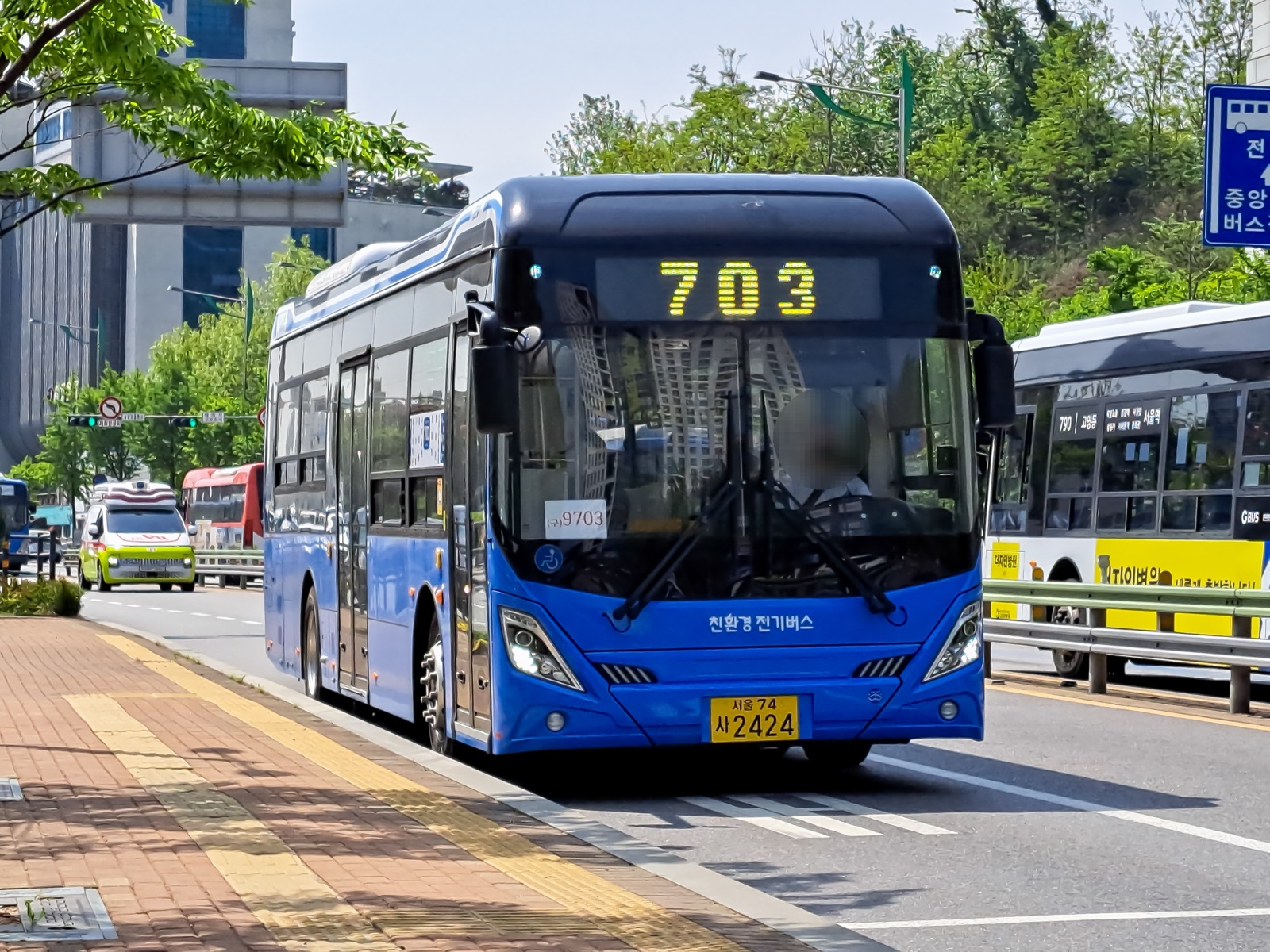
Seoul buses are useful once you know the direction and stop name, but first-time visitors should use them selectively. Use subway for simple cross-city travel, then add buses when they reduce walking, avoid a bad transfer, or reach a neighborhood that subway exits do not serve well.
Seoul buses are useful, but they are not always the best first choice for every visitor. For many travelers, the subway is easier to trust at the start of a trip because it feels more structured and predictable. Buses become more valuable once you understand where they actually save time and where they only create extra decisions.
Why buses matter in Seoul even if the subway is stronger
Buses matter because they can connect the parts between subway stations. In a large city, not every useful route lines up neatly with rail lines. Sometimes the subway gets you close, but not comfortably close. Sometimes a trip requires a transfer that feels awkward, indirect, or tiring. In those cases, a bus can turn a clumsy route into a straightforward one.
This is especially true when your start and end points sit along the same broad corridor. A bus may remove the need to go down into a station, change lines, walk through transfer passages, and come back up again. Even when the time difference is not dramatic, the route can feel simpler because it becomes one continuous movement instead of several disconnected steps.
Buses also help when your day involves places that are near each other geographically but less elegant to connect by subway. The subway is excellent for major cross-city movement, but it does not always reflect how visitors actually travel during a sightseeing day. Travelers often move between neighborhoods, viewpoints, shopping streets, cafes, museums, and hotels in patterns that are not perfectly rail-shaped. A bus can bridge that gap.
Still, buses are not automatically better just because they are closer to the street or seem more direct. Their value comes from solving a clear problem. If the subway already gives you a simple, reliable route, there is no need to force a bus into the plan. For first-time visitors, buses work best as a second tool, not as the system you try to rely on everywhere from day one.
That mindset helps remove pressure. You do not need to prove that you can use buses for every trip. You only need to notice the moments when a bus obviously makes more sense than another option. When you approach it that way, the system becomes far less intimidating.
When a Seoul bus is usually worth using
A Seoul bus is usually worth using when it clearly simplifies a known route. The word that matters most is clearly. If the benefit is obvious, the bus is probably a good choice. If the benefit only appears after a lot of guesswork, the bus is probably not worth the mental effort for a first visit.
There are several common situations where buses tend to feel practical rather than stressful.
- When the bus cuts out one or more awkward subway transfers
- When the route is simple and easy to track from start to finish
- When the origin and destination sit comfortably on the same corridor
- When the bus stop locations are more convenient than the train stations
- When you already understand your fallback subway route
That last point matters more than many travelers expect. A bus becomes much less stressful when you know what you will do if something feels unclear. If you already understand the subway alternative, then trying the bus feels like a choice rather than a risk. You can stay calm because you know you are not trapped.
Buses are also often a good option later in the trip, after you have already spent a day or two moving around the city. By that stage, you usually understand neighborhood names better, you recognize major roads more easily, and you have a stronger sense of direction. That makes a simple bus route feel much more manageable than it would on your first morning after arrival.
Another sign that a bus is worth using is when the route supports the rhythm of your day. If you are making a short urban hop, carrying light bags, and moving between places that are naturally aligned, a bus can feel efficient and low-friction. If you are tired, overloaded, or already mentally stretched, even a good bus route may not be the right choice in that moment.
In other words, a bus should not only make sense on the map. It should also make sense for your condition, your confidence level, and the kind of travel day you are having. Practical transport planning is about matching the route to the traveler, not just choosing the most theoretically efficient line.
When the subway is still the better choice
If you are tired, uncertain about the route, or crossing major parts of the city, the subway usually remains the safer default. Predictability matters more than theoretical efficiency for many first-time visitors. A trip that feels easy to execute is often better than a trip that is only slightly faster.
The subway is especially useful when you need a dependable backbone. If the day involves a longer cross-city movement, a timed reservation, or a place you really do not want to be late reaching, reliability and clarity become more important than experimentation. The subway gives many visitors a stronger sense of control because the route structure is more visible and easier to confirm step by step.
The subway is also the better choice when you are already overloaded with decisions. Travel days are not only about transport. You may be checking directions, handling language differences, watching your luggage, thinking about tickets, and managing your energy. In that setting, reducing one layer of uncertainty can improve the entire day. Choosing the subway is not a failure to use local transport well. It is often the most practical decision available.
There are also emotional reasons to prefer the subway at times. When a traveler feels anxious about getting off at the wrong stop, missing a turn, or second-guessing every movement, the journey stops feeling efficient no matter what the route planner says. Confidence has real value. If the subway gives you that confidence, then it is doing exactly what good transport should do.
Many first-time visitors benefit from a simple rule: use the subway by default for major movement, and only choose a bus when the improvement is obvious enough that you do not have to talk yourself into it. That rule prevents overcomplication. It keeps the city manageable and reduces the temptation to optimize every route too aggressively.
The better transport choice is the one you can execute calmly. In practice, that often means the subway remains your main tool, while buses stay available for the moments when they clearly add convenience.
What usually confuses first-time bus users
The most common problem is trying to improvise with buses before understanding the route. That makes every stop and turn feel harder than it needs to. A planned bus route is often useful. A guessed bus route usually is not.
For first-time visitors, confusion usually comes less from the idea of buses themselves and more from decision overload. On the street, everything happens in sequence and in public. You are checking the stop, watching for the right vehicle, confirming direction, preparing to board, and trying to avoid delaying other passengers. Even a small uncertainty can feel larger because there is less time to pause and think than there is in a subway station.
Another source of confusion is assuming that a bus should be handled casually just because it runs on regular roads. In reality, it often works best when treated as a deliberate point-to-point tool. You decide on the route first, confirm the boarding stop, understand roughly where you will get off, and then take the bus. That approach removes most of the uncertainty that makes buses feel difficult.
Travelers also get into trouble when they choose a bus without understanding what problem it is solving. If you cannot explain why the bus is better than the subway for that specific trip, it may not be the right moment to use it. A bus should offer a visible benefit such as fewer transfers, a simpler street-level connection, or a more comfortable start and end point. If the advantage is vague, confusion tends to take over.
It also helps to remember that not every travel moment is a good test case. If you are rushing, navigating an unfamiliar area after a long day, or trying to recover from an earlier wrong turn, that is usually not the best time to experiment. Bus confidence grows fastest when you use it in low-pressure situations: a route you have already reviewed, a straightforward daytime trip, and a journey where a backup option is easy.
That is why buses work best as part of a deliberate plan. Once the route is understood, the system feels much less mysterious. Most of the stress comes from uncertainty before boarding, not from the ride itself.
The best Seoul bus rule for travelers
The best rule is simple: use buses when they clearly simplify a known route, and use the subway when you want the most predictable backbone. That balance is usually what makes Seoul transport feel easy instead of messy.
This rule works because it protects you from two opposite mistakes. The first is ignoring buses completely and missing easy street-level connections that would make the day smoother. The second is trying to use buses too aggressively before you have enough confidence to do so calmly. A balanced approach avoids both problems.
In practice, this means asking a few basic questions before choosing a bus. Does it remove a frustrating transfer? Is the route straightforward enough that you understand it before leaving? Do you know where you are starting and where you will get off? Would you still feel comfortable if the trip took a little longer than expected? If the answers are mostly yes, the bus may be a good choice. If the answers are mostly no, the subway is probably better.
It also helps to think of the day as a series of energy decisions rather than a series of map decisions. Early in the trip, or early in the day, you may have more attention available for a bus route that offers a clear benefit. Late in the day, when your focus is lower, the predictability of the subway may be worth more. Good city navigation is not about proving versatility. It is about keeping the day functional and reducing avoidable friction.
For many visitors, the most effective habit is to start simple and expand gradually. Rely on the subway for the big structure of the trip. Add buses only when they solve obvious gaps. After you have used a few straightforward bus routes successfully, your confidence grows naturally, and the city starts to feel more connected. That progress is more useful than trying to master everything at once.
Clarity beats improvisation almost every time. If a bus clearly helps, use it. If it creates doubt, choose the subway and move on. That is the practical mindset that makes Seoul buses useful for first-time visitors without letting them become an unnecessary source of stress.
How KR Guide Info checked this guide
This guide was reviewed as a practical Seoul bus use for first-time visitors guide for foreign visitors, with the goal of reducing real travel friction rather than adding generic destination description.
- reviewed the guide around when buses simplify a route and when they add stress for visitors
- kept bus advice tied to route confidence, stop names, transfer timing, and map-app tracking
- treated subway and taxi as fallback comparisons so readers do not feel forced into buses when the route is unclear
Official sources
Related KR Guide Info guides
- How To Use Public Transport In Korea
- T Money Card Guide For Tourists In Korea
- Naver Map Vs Kakao Map For Korea Travel
Update log
- June 10, 2026: Added review-focused trust sections, current official source links, related internal guides, and this update log for AdSense readiness.