Last checked: June 10, 2026
Quick answer
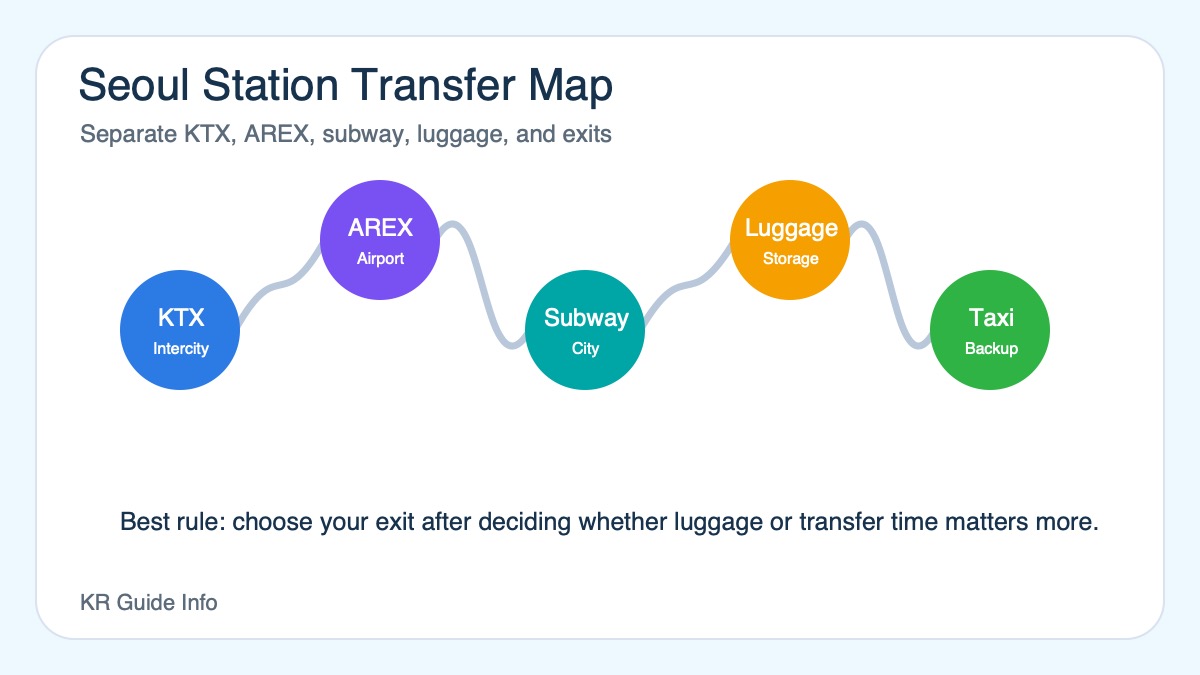
Seoul Station is useful for AREX, KTX, subway transfers, and airport-area hotel strategies, but it can feel confusing on a first visit. Decide your exit, ticket type, and luggage plan before arriving, especially if you are connecting to a train or airport route.
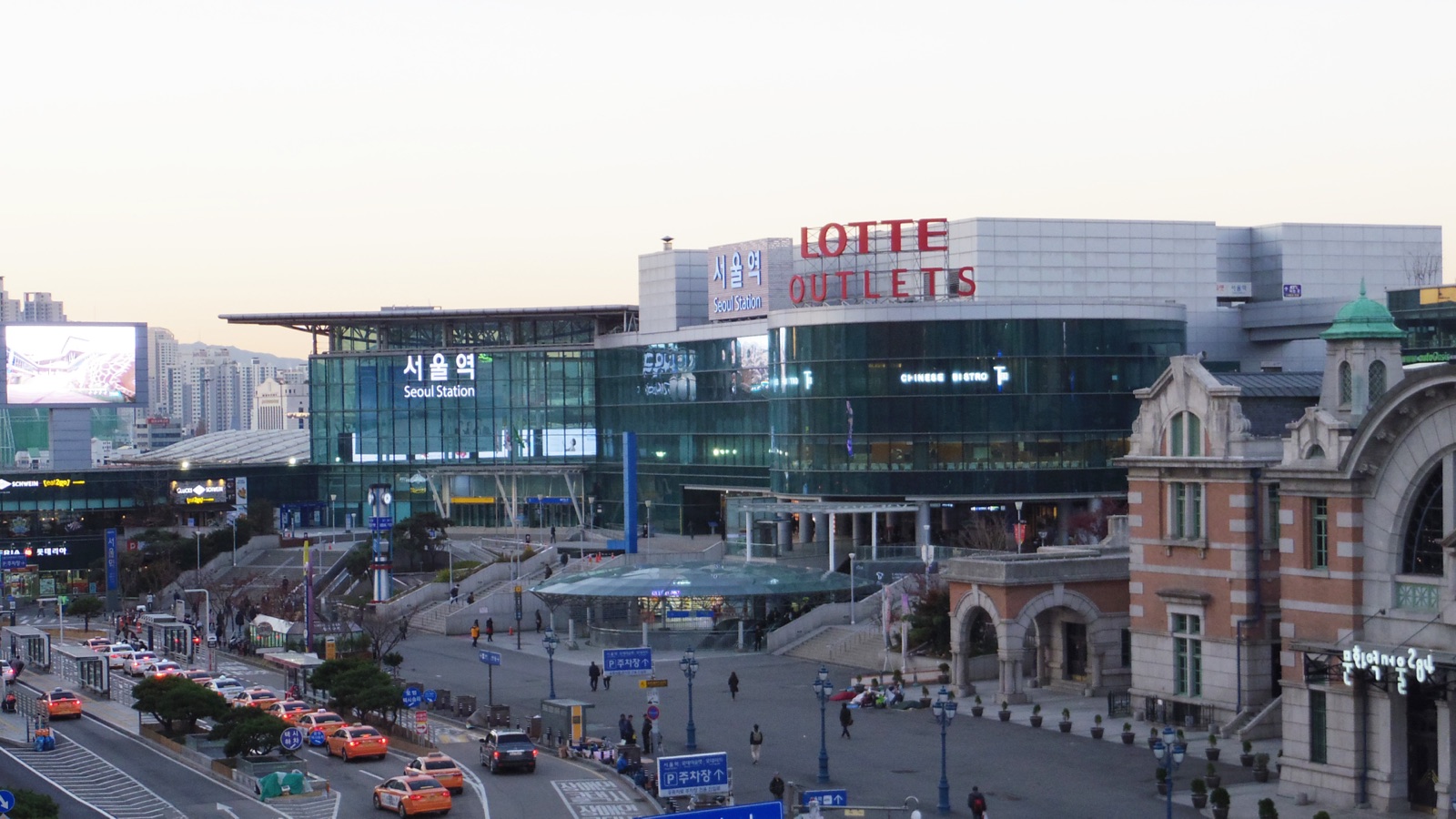

Why Seoul Station matters in a Korea trip
It matters because it often sits at the intersection of arrival-day planning, city transport, and intercity movement. If your trip uses any two of those three, Seoul Station becomes relevant quickly.
That is why it helps to think of the station as a function, not just a location name.
What travelers usually need from Seoul Station
- Airport rail connection logic
- Intercity train planning
- Simple local transfer awareness
- A realistic sense of movement time inside a large station
You do not need every station detail on day one. You need the details that match your route that day.
What makes the station feel harder than it is
Large stations feel stressful when travelers arrive without knowing what role the station plays in their itinerary. If you know whether you are using it for airport transfer, KTX, or local movement, the station becomes much easier to interpret.
Ambiguity creates more stress than scale.
How to use the station without overcomplicating it
Decide your route purpose first, keep your ticket and destination clear, and leave extra time if it is your first pass through the station. That alone removes most of the anxiety many travelers feel in major hubs.
Stations feel easier once you stop demanding total mastery from the first visit.
The best first-time rule for Seoul Station
Treat Seoul Station as a functional transport hub, not a puzzle you must solve completely. If you know which part of the station matters today, the rest becomes background noise.
That mindset usually makes the whole place feel much more manageable.
How transport advice should shape a traveler’s day
Seoul Station Guide for First-Time Travelers is most useful when you treat transport as part of the experience rather than as a background technical detail. In Korea, transport quality is high enough that route choices influence how relaxed or rushed the whole day feels. One better movement decision often improves everything that comes after it.
What visitors usually underestimate about moving around Korea
- Choose the most predictable route when the day already has enough complexity
- Build one fallback route when timing matters
- Pay attention to station exits and last-leg walking distance
- Use the “cleanest route” rather than the most ambitious route
Use Seoul Station as a transfer point, not automatically as a hotel base
Seoul Station is useful when your trip connects AREX, KTX, subway, buses, or nearby hotels. The difficult part is that “Seoul Station” covers several platforms, exits, underground corridors, and road crossings.
| Task | Planning rule | Failure point |
|---|---|---|
| AREX to hotel | Check the exact exit and final walking route | Following a map pin across a difficult road with luggage |
| Subway to KTX | Allow transfer and platform-finding time | Treating train departure time as station arrival time |
| Taxi pickup | Use a named exit or pickup point | Driver and traveler waiting on opposite sides |
| Luggage storage | Save a second storage location | Large lockers being full |
| One-night stay | Compare transfer convenience with evening atmosphere | Booking “near Seoul Station” without checking the walk |
Photograph or screenshot the return entrance if you leave the station. When carrying bags, an elevator route that is slightly longer can be easier than the shortest staircase route.
Official sources
Related KR Guide Info guides
- Where To Stay In Seoul By Travel Style
- Korea Luggage Delivery Guide When Airport To Hotel Delivery Is Worth It
How KR Guide Info checked this guide
This guide was reviewed by the KR Guide Info editorial team for Seoul Station navigation. We checked station layout, airport-rail/KTX/subway transfer logic, luggage-risk points, and official transport sources before updating the article, then focused the advice on practical decisions a first-time foreign visitor is likely to make on the ground.
Practical transfer checklist for Seoul Station
Use this checklist before you enter the station, not after you are already carrying luggage through a crowded concourse.
| Situation | Best first move | Common mistake |
|---|---|---|
| Arriving from Incheon Airport | Confirm whether you need AREX, subway, KTX, or taxi before leaving the platform area. | Following the first “train” sign without checking the service type. |
| Large suitcase | Prioritize elevators and wider routes even if they add a few minutes. | Choosing stairs because the map looks shorter. |
| Tight KTX connection | Arrive early and treat food, lockers, and ticket pickup as optional. | Trying to shop or eat first, then rushing across the station. |