Last checked: June 10, 2026
Quick answer
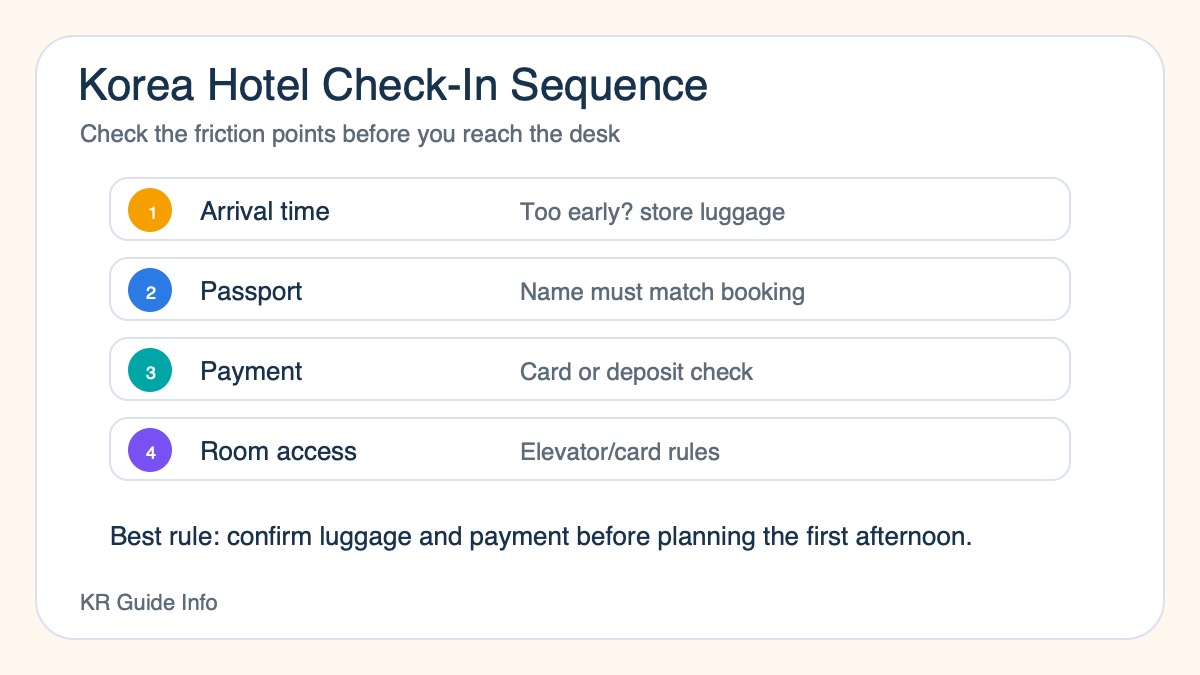
Korea hotel check-in is smoother when you prepare your passport, booking name, arrival time, luggage plan, and payment method before you reach the desk. The biggest avoidable problems are early arrival with bags, name mismatches, and assuming every hotel handles late-night entry the same way.
Hotel check-in in Korea is usually straightforward, but first-time visitors still run into the same small problems: arriving too early, not having the booking details ready, or assuming the process will feel exactly like home.
Why hotel check-in matters more after a flight than it does on paper
On paper, hotel check-in looks minor. In real travel conditions, it often shapes the whole first afternoon. If you arrive tired, carrying bags, and unsure whether your room is ready, the friction can spread into the rest of the day.
That is why it helps to prepare a few simple things before you land instead of solving them at the front desk.
What to keep ready before you arrive at the hotel
- Your booking confirmation and hotel name
- Your passport and any required ID
- The hotel address saved in your phone
- A backup note with check-in time and late-arrival details
- A simple plan for what to do if you arrive before standard check-in
If your airport transfer still needs work, pair this with the airport-area hotel guide.
What usually happens if you arrive early
Some hotels can hold luggage before the room is ready, and that alone can save the day. The key is not to assume early room access. Build the arrival plan around the official check-in time unless the property has directly confirmed an exception.
Luggage storage plus a lighter first outing is often the cleanest early-arrival strategy.
Mistakes that create unnecessary hotel friction
The biggest mistake is treating the first day like a full sightseeing day before the room situation is clear. Another common issue is not having the hotel details ready when a taxi driver or front desk needs them quickly.
Small preparation removes more stress here than many travelers expect.
The best arrival-day hotel rule
Expect a normal check-in window, plan your first few hours around luggage flexibility, and keep the first day light. That is usually enough to make the arrival feel much easier.
A stable hotel arrival often improves the whole first day.
Practical hotel check-in situations travelers should plan for
Hotel check-in in Korea is usually simple, but the problems start when your flight, luggage, concert ticket, or KTX plan does not match the hotel’s normal check-in window. Treat check-in as part of your arrival plan rather than something you solve after reaching the front desk.
If you arrive before check-in time
Do not assume your room will be ready just because you arrived in the morning. A safer plan is to ask whether the hotel can hold your luggage, keep your passport or booking confirmation ready, and then plan a nearby low-effort activity. For Seoul, that might mean a cafe, department store, museum, or neighborhood walk. For Busan, choose something close to your hotel area rather than crossing the city with a tired group.
If you arrive after midnight
Late arrival is the situation that deserves the most checking. Some budget hotels, guesthouses, and small local properties may have limited front-desk hours or self-check-in rules. Before booking, look for late check-in language in the property details and message the hotel if your flight, KTX, or concert schedule may push you past normal hours.
Documents and payment checklist
- Keep the reservation name, passport, and booking confirmation together.
- Use a card that can handle a deposit or on-site payment if required.
- Save the hotel address in Korean and English before you leave the airport or station.
- If you use a luggage delivery or storage service, confirm the hotel accepts delivery before sending bags.
This guide is not only about the front desk. It is about avoiding the common first-night problem where a traveler has a room booked but no practical plan for bags, timing, payment, or late arrival.
Check-in planning examples
Example 1: overnight flight arrival. If you land early in the morning, book a hotel that clearly offers luggage storage or consider paying for the previous night if you need immediate sleep. This is often more practical than arriving exhausted and hoping for a free early check-in.
Example 2: concert or festival day. If you are checking in before a concert, finish the hotel process before going to the venue. Leaving passport checks, luggage questions, and payment issues until after a late event can turn a fun night into a stressful return.
Example 3: airport departure day. If your flight is late in the evening, confirm whether the hotel can store luggage after checkout. If not, compare station lockers, luggage storage counters, or airport-side options before you leave the hotel area.
The best hotel choice is not always the cheapest room. For first-time Korea visitors, a hotel with clear front-desk hours, easy station access, luggage storage, and responsive messages can be worth more than a slightly lower nightly rate.
Official sources
Related KR Guide Info guides
- Korea Arrival Checklist First Time Visitors
- Where To Stay In Seoul By Travel Style
- Best Areas To Stay Near Incheon Airport Before An Early Flight
How KR Guide Info checked this guide
This guide was reviewed by the KR Guide Info editorial team for Korea hotel check-in. We checked common hotel timing rules, passport/payment expectations, luggage-drop scenarios, and traveler failure points before updating the article, then focused the advice on practical decisions a first-time foreign visitor is likely to make on the ground.
What to prepare before walking to the front desk
Hotel check-in problems usually come from small mismatches: booking name, arrival time, payment card, or luggage expectations. Prepare these before you reach the counter.
| Check-in item | Why it matters in Korea | Backup plan |
|---|---|---|
| Passport and booking name | Hotels may need to match the reservation and guest identity. | Keep the booking app and confirmation email available. |
| Foreign card | Some cards fail because of issuer, terminal, or online/offline authorization differences. | Carry another card and a small cash buffer. |
| Early arrival | Rooms may not be ready even if luggage storage is possible. | Plan a nearby café, station locker, or short first stop. |
Related KR Guide Info guides
- Where To Stay In Seoul By Travel Style
- Where To Stay In Busan By Travel Style
- Korea Arrival Checklist First Time Visitors
Update log
- June 10, 2026: Added review-focused trust sections, current official source links, related internal guides, and this update log for AdSense readiness.